Out-Of-Body Experiences Explained (And Verified?) w/Graham Nicholls
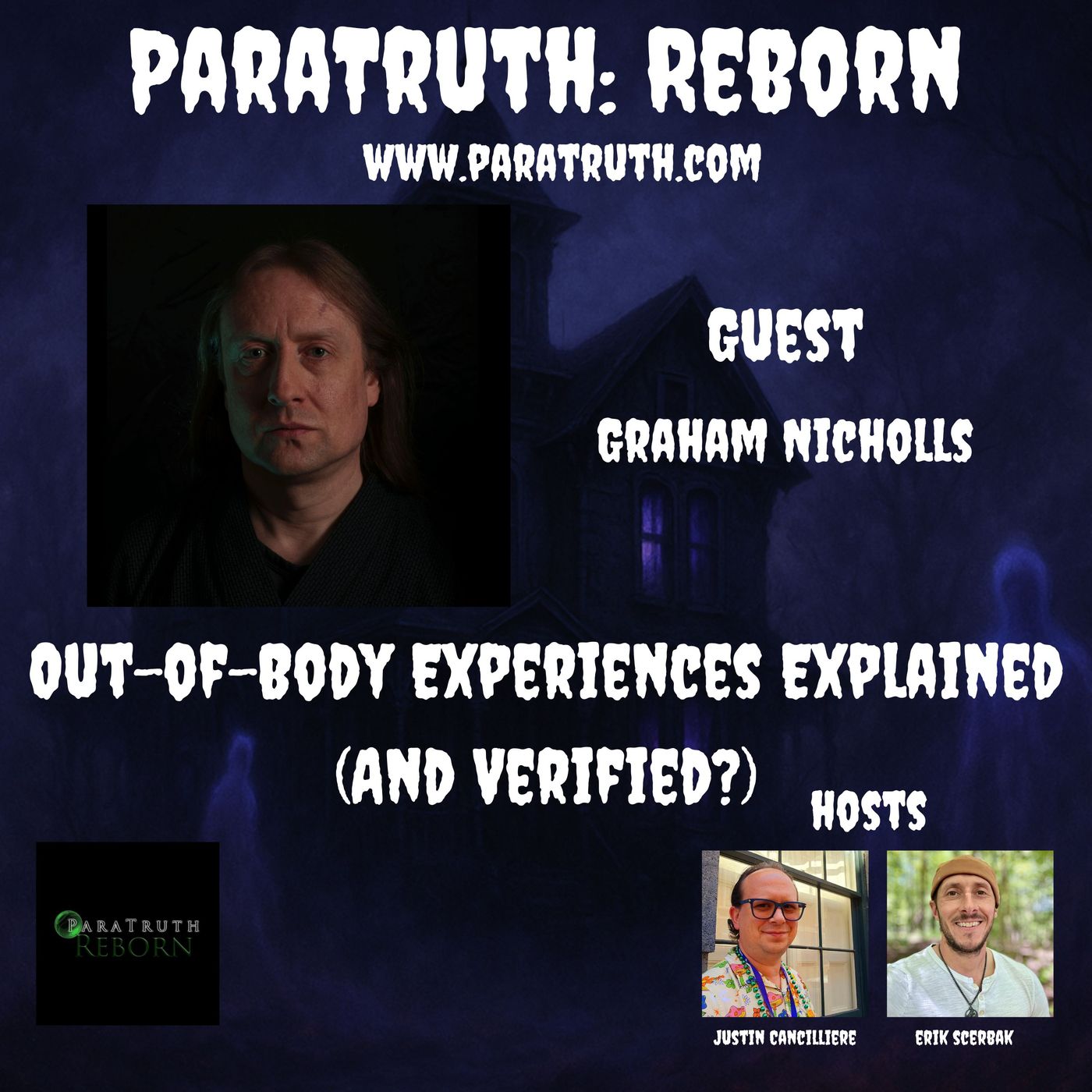
What if your consciousness could leave your body—and come back with proof? This week on ParaTruth: Reborn, we sit down with leading OBE researcher Graham Nicholls to explore the reality behind out-of-body experiences. From his first experience in...

 Apple Podcasts

 Spotify

 RSS Feed

 Amazon Music

 Castbox

 Deezer

 Podcast Addict

 Podchaser

 JioSaavn

 Spreaker

 YouTube
What if your consciousness could leave your body—and come back with proof?
This week on ParaTruth: Reborn, we sit down with leading OBE researcher Graham Nicholls to explore the reality behind out-of-body experiences. From his first experience in 1987 to participating in controlled research studies, Graham brings a grounded, rational perspective to something often dismissed as fantasy.
Are OBEs hallucinations… or evidence that consciousness exists beyond the physical body?
Tune in and decide for yourself.
Guest Bio: Graham Nicholls is an English author, as well as a lecturer and advisory board member for The Rhine Research Center. He is a leading practitioner and researcher into out-of-body experiences. He had his first OBEs in 1987 and has had some of the most acclaimed verified experiences on record. He has participated in research at The Rhine Research Center, The Institute of Noetic Sciences and has organised and taken part in research with biologist Dr. Rupert Sheldrake. He is the author of Avenues of the Human Spirit and Navigating the Out-of-Body Experience. Graham Nicholls has gained much attention for his rational approach to his abilities and has lectured at venues including Cambridge University, Kings College, The Society for Psychical Research, The International Remote Viewing Association Conference, The London Science Museum, London. Graham Nicholls incredible verified OBEs are also featured in several books by other authors.
Become a supporter of this podcast: https://www.spreaker.com/podcast/paratruth-reborn--6273542/support.
Thanks for listening!
0:00 Coming up on Paratruth ree Born, I'll be talking to Graham Nichols about out of body experiences. Welcome, we do parent Truth. Truth, what's going on paratruthers. Welcome to another episode of Paratruth Reborn. My name is Justin and I am very happy to welcome Graham Nichols to the show to talk about out of body experiences. Graham, Welcome to Paratruth re Born.
0:53 Hi, thank you, it's good to be here. Now what got you started in studying out of body experiences? Well, I guess having my own spontaneous experiences when I was around eleven or twelve, and then learning to induce them a couple of years later. So it was kind of. It happened naturally to me, and then I wanted to understand what the experience was and learn more about it. And basically I heard about the concepts. I don't really remember where I heard about it. It was maybe an UR newspaper or on the television or something, but I heard about this concept about body experiences and I had the sort of Eureka moment, Oh, that's what happened to me.
1:41 So that began the process of looking into it. And read the book on the subject, and then discovered there was a teacher in London who was giving a lecture around that time as well. So I kind of went to his lecture and then became his kind of prodigy, I guess, and started working for him on the weekends, and so it just became my focus in life, I guess. Okay, So I think a lot of people associate out a body of experiences with near death experiences. What's the difference.
2:21 I think out of body experiences are a component of a near death experience. An out of body experience can obviously happen completely independently of a near death experience. Out of body experiences can arise from many different states of consciousness, whereas a near death experience really is inducing an out of body experience because of a cardiac arrest or because of a situation where you're very close to death. It's not always cardiac arrest, but very very close to a sort of death state, and then someone will have an out body experience and that and then develop into things like going down the tunnel that many people are aware of, meeting with loved ones who've passed over, that kind of description that we're all sort of familiar with. But yeah, so I think the out of body experience is really a component of that near death situation. There's even the area of shared death experiences, which are less known about, and shared death experiences are when someone has an out of body experience at the same time as someone else is having a near death experience or an actual death experience and shares in that process. I had an experience like that when I witnessed a plane crash basically the people who died in a plane crash, and I found myself in this misty, cloud like environment. I witnessed all
3:52 these people in a state of confusion, not really sure what was happening to them. I even saw them going through their life review and the whole process. And then shortly after that experience, I discovered that there had been a plane crash in Svalbard, which is an island part of Norway, and it was sort of on the news the next day or I don't remember exactly when they reported it, but after my experience and I realized that it was at the same time that I'd had the outboody experience, so it all kind of correlated, and the description of the people were sort of they were of Slavic descent. They were miners going to the island to do mining work, and I've literally seen them as kind of manual workers, you know, very kind of leathered appearance and that kind of thing. So, yeah, that was a powerful experience because I could kind of verify it in the real world essentially. So that's an example of a kind of shared def experience.
4:58 That's that fascinating that you had that experience because I've heard of people astro projecting, which is typically considered our body experience in a sense, and doing like work on the astral plane while they're out of their body. So it's fascinating that you had an experience that kind of correlates with that. Now, when you had your first experience at eleven, what was that experience? Like? The very first experiences were quite fleeting. My memory of them is quite vague now, but essentially they were quite unusual actually because they weren't like most people tend to think of coming out of your body, looking back at yourself, lying on the bed, that kind of description.
5:53 But it wasn't that at all. Those first experiences. I found myself of half a mile from where I actually lived near to the school that I went to at the time, and I found myself sort of floating vertically off the ground, maybe hard to say, half a meter something like that. But I was off the ground, and I was observing the environment around me, and it was hyper vivid, hyper real, you know, it was like I was physically there. The only difference was that I was off the ground, which obviously wouldn't be a normal scenario.
6:34 So I didn't know what this was. I didn't know what I was experiencing. I wasn't asleep, so it wasn't like I knew. It wasn't a dream, and I felt myself go into this sort of altered state. It was sort of like a trance state came over me, which is still how I do it now. I don't do it from sleep, which is often an assumption people make. I don't do it from sleep. I don't do it from sleep paralysis. I don't do it from lizard dreams, from a like a trance state, basically a conscious waking trance state. And yeah, so that's kind of how it happened. And I just found myself in that location and was obviously surprise startle. Looked around at the environment, and then a few moments later I found myself back in my body, back in my bedroom. So they were quite brief, kind of fleeting experiences, those early ones, but obviously they stayed in my memory and I was kind of like, what was that. I had no language for it. I didn't know what it was until I heard about this concept.
7:41 Out of all the experiences. Now, I mean eleven, twelve years old, that's a really young age to be having this experience. Was there a point that you thought it could be a dream or when did you realize that, you know, this is something more than just a dream. I don't think I really considered them to be dreams, because, like I said, I was awake and you know, conscious when the state came over me, and it didn't feel like a dream in any way. And it's that's still the case today, and I've had my EEG observed. Now I've done a lot of research with my own kind of using neurofeedback and things like that sort of eg that sort of thing to look at my own brain states.
8:37 I used that to sort of develop my own sound technology, which uses infrasound infeliminal technology. So during the process of developing that. I did a lot of monitoring of my own brain state, monitoring when I was in the vibrational state, which is sort of the precursor to a lot of our body experiences. One of them, I call them the transitional stages. There are others that the void state, for example, that's another common one that people have, but the vibrations are the most common. And so I sort of observed what was going on with my own brain while the vibrations were happening, and then sort of developed the sound technology to kind of work with those same brain waves and replicate that our body state, or the vibrational state anyway. So during that process, it was clear that I wasn't having rapid eye movement. I wasn't in the kind of brain ways that you would associate with sleep or with dreaming. And then we have also, you know, more recent science like fMRI research that's been done in Canada, for example, that where they took a young woman who was a to induce our body experiences pretty much consistently, and they put her in the from her eye scanner and looked at her brain state, and again, she wasn't having the brain
10:12 waves that you would associate with with dreaming, or at least the dreaming. So we have quite a bit of research that sort of demonstrates that that it's not it's not just a dream state. Okay, well, and I mean just like the near death experiences. I mean, if you can describe something that's in the room next door, you hadn't been in that room before, and you're taking part in an experiment like that, I assume that you're not dreaming. So I completely get that. But from you know, from a young child's perspective, it I almost wonder if it ever felt like a dream to you, But obviously it didn't. So trying to tell people this from you know, from that young of an age.
11:05 How did people react to that? I don't really remember too much about how they reacted. I guess it was more when I started learning to induce them myself, which was about fourteen, and when I was working with the teacher, my sort of mentor, Douglas Baker, when that process began. That was when I started talking about it more. I guess some people were superstitious about it. A lot of people have unfounded fears and things about the experience, So there was that some people that were just you know, skeptical, but not in an engaging way.
11:49 They would just be like, oh, I don't really believe in that. And that was as far as the conversation went. So it wasn't like it was sort of like a big debate or anything like that. It was just, you know, it was either disinterest or superstition or genuine interest. Those were the sort of three responses I had. I guess my parents were interested in a sort of it's not my thing, but it's interesting kind of That was sort of their attitude towards it. I guess, Okay, now, something that I've always wanted to try as actual projector even have our body experience or even.
12:32 Stuff like that. But one of my biggest fears has always been not wanting to come back or getting separated from my body. Is that a possibility, I don't think so. I've not really come across any real evidence that that's really. A genuine concern. I mean, most people, you know, in the in the teaching I do, when I work sort of private tuition with students and things like that, a lot of the focus is on staying out longer. It's not on it's not on like whether they'll come back or not, because most experiences when you're learning, the first experiences tend to be shorter, and then as you develop, as the whole process gets kind of deeper, it sort of starts to get to around twenty minutes seems to be about the average experience with people. So it's not like it's a really long experience or like this really any issue with getting back to the body. I think being in the body is sort of your default state, if you like so, I think I think it's more like your brain, your mind wants to kind of click back into its normal state of being. But then we can get into the whole philosophical perspective of is it actually taking place in the sense of something leaving the body, like a soul
14:04 or a spirit or anything like that. I tend to think it's more like an extended consciousness that you're sending some aspect of yourself, some perceptual part of yourself to another location, rather than like a literal sort of spirit body or. Something like that. So when you look at it in that more modern context, I think then the idea of being inside or outside starts to break down a little bit as well. There's the whole idea. You know a lot of ideas about like is consciousness even based in the brain, or is it just is it like a field around us? Is it sort of extended so we're almost like a node on a bigger network. So there's lots of possibilities for how the experience might take place. So I don't think that's really anything to worry about.
15:01 Well, I'm glad you explain it like that, because then it kind of makes me think of like remote viewing or you know, like a telepathic experience, stuff like that over your spirit or soul or whatever you want to think about it, leaving your body. Yeah, well I see it like I mean, I don't. With all of this work, I tend to take the approach of I'm always open to learning new things and seeing what the truth might be. I'm definitely not a person who's into dogma and saying, oh, this is how it is and I've worked it all out. I tend to shy away from people like that. I'm kind of right, you know, I'm never convinced by that kind of thing, because although it maybe sounds good in a kind of sales pitch kind of way, I don't think it really I don't think it's really true that anyone can say they've worked these things out. I think it's far more exciting in a way to be open and say, well, we don't really know how it works, and there's these little clues and hints, and we're kind of developing more understanding, and that's what I try to do. That's why I'm quite interested in being involved in the science. And I think pretty much the only author, the only person in this field who's also doing science and taking part in experiments and that kind of thing. And part of the reason for that is because I really believe in the
16:32 more we understand the experience, the better we'll be able to induce the experience and to teach people how to do it, and also the more likely it will be that it will be taken more seriously and people will, you know, start to see that there is something valid in this experience for sure. Well, and you know, anybody who cause themselves and quote a quote expert in anything that has to do with paranormal supernatural stuff, it's like, well, are you an expert though, because there's a lot that is still unexplained, and if you're an expert, you should be able to explain anything that has to do with what you're talking about.
17:18 Well, to some degree, I think expertise can be that you have a full knowledge of the current available information, the current available knowledge, you know, because it's I guess with everything, it's all you know, it's only to the level that we currently understand it. It's like with medical science or something. You know, someone can be an expert in brain and science, but they're an expert in our current understanding of brain science. So I guess it's sort of but you know, who knows. Twenty years time, the field might be completely completely transformed. So but that's exciting to me because I am, you know, I'm really interested in all these interesting aspects of the experience. For example, I'm very interested in the visual perception in obe s because you're talking about seeing things in another room or whatever. Well, in order to do that and understand that, we need to understand how vision works in an hour body experience.
18:20 Often it's just assumed that it's exactly the same as it is in any other, you know, situation, like in normal everyday life. But of course, why would it. Be like that you're in a completely different, altered state of consciousness You're perceiving things in a completely different way, so why would vision work in the same way. And we have all these clues, like, for example, the cerulean state, as I call it, which is this sort of blue gray state of vision that I've had in several of my verified witnessed experiences, especially my sort of most famous, the sort of so Ho pre cognitive experience that I had, where I witnessed I was in a room with four other people teaching them the g technique, which is one of the methods I used to induce an out of body experience, and I went into quite a deep chance state, went out of body, found myself in Soho in central London, and I witnessed a bombing an explosion coming out from a pub a bar at the far end of the street.
19:32 And then told everyone in the room. What I perceived and that I felt that this was a precognitive experience. It was one of the deepest experiences I've ever had. Several of the people there had to sort of try and coax me back to consciousness because I was very very deep in this sort of altered state. But when I did come back to the room, I described everything that happened, and then fire days later there was a bombing in that exact street, in a bar in the location that I said. If people are interested, there's a video with one of the witnesses describing it as well. You can on my website or on YouTube.
20:18 So yeah, that was. It's a very unique experience because it was precognitive. It was witnessed as I had the outbu the experience, and all of the details were verified. So so doing this it's not just like in present time. Because you mentioned precognition, you can have a out of body experience and be experiencing stuff in other parts of time. Then yeah, I mean I didn't intentionally go into you know, I struggled with the whole idea of precognition. I still do. I think, you know, the whole idea of seeing something for it happens is quite counterintuitive. I guess it's a difficult thing to get your head round, right, So yeah, I struggled with that concept. But I had this strong intuitive feeling that what I'd seen was not happening right now, but was a pre cognitive experience, and I said that at the time to the people in the room. So it was you know it was. It was very unusual for me. So it's not something that I would say I do. I don't sort of look to go sort of to the future or anything like that, particularly in my experiences. But I've had I've had probably three pre cognitive experiences, so it's not a common feature. But that
21:51 was interesting because it was probably my most powerful outbody experience and it was also pre cognitive, and it was also witnessed. So now, can anybody do this or learn how to do this? I think within reason, yeah, I mean with my private tuition and courses and things that I teach, I think most people, most people can get to a sort of reasonable level if they if they do it consistently. That's really the key, the big mistake. This is a really good piece of advice because the big mistake that most people make is that they jump from technique to technique, and I think with OBEs it's a bit like muscle memory.
22:41 You need to consistently do the practice, even if it becomes tedious, even if you feel like you're not making progress, you have to kind of stick with it and be consistent with the technique. When I learned to induce my own experiences I just had one basic technique that i'd read in this book by Genetly Mitchell, a parapsychologist, and I just did that technique relentlessly because it was the only one I had, and I think that was actually part of why I ended up being successful. But it did take six months for me to get to that point, even though I'd had a few spontaneous experiences already. So I think there's a yeah, there's a degree of kind of persistence with it.
23:29 But I think, like with most. Things, like with playing a musical instrument or learning a language or something like that, I think it comes down to who's going to be persistent and he's going to kind of keep going when maybe the initial excitement has worn off and keep going with the process. But what, like I said, what a lot of people do is they'll sort of they're looking for this sort of wonder technique and really there there isn't one. The biggest key is that consistency, and then on top of that, it's the pre state. That's what I always advise. People, Like in my teaching with people, I always focus on teaching them how to get to the pre state for the outbody experience. What I mean by the pre state is kind of like the altered state that I talked about, being in that sort of deep state, so that you can initiate the outbody experience from that. Because again, what a lot of people do is they learn a technique, say online, they look up a technique, and then they try to apply that technique without being in a sort of altered state to start with, or they just try to do they try to get into sleep paralysis or something like that. And that's not the greatest either, because sleep paralysis is for most people are very negative, scary, unpleasant experience. So it's not really the way that I would recommend for most people. Unless you have it naturally
25:04 all the time or something, then obviously yes, utilize it, but I don't think it's particularly something to look for because it's you know, it's a very unpleasant experience to have really for most people. So so yeah, I guess another approach I take is to try and cater the methodologies the techniques to the individual, because I think sometimes, for example, people will give someone a visualization method and maybe that person is no good at visualizing, maybe they can't visualize, so that's not very good or They'll give someone a lucid dream method and that person never remembers their dreams, even so, how are they going to get lucid?
25:46 So it's about. Applying the right methodology, the right approaches for the individual. Okay, now, when you're starting to induce this state of consciousness, is there like a type of meditation involved or how does that usually work when you're starting to go into an obe. It's a bit more complicated than the type of meditation I would say. I would say there's sort of different components to it. Like I mentioned the sound technology I use, which is not binormal beats. A lot of people, you know, assume it's binural beats, but I literally developed infraliminal sound because I didn't find binural beats very effective for me.
26:33 So I started to look. Into alternatives, and then I looked into infrasound, and then also looked into hypnotic suggestion and things like that. So basically I sort of combined the two together and developed that sound technology. And it was also based on the vibrational state. When I'm in the vibrational state, trying to sort of replicate that, So that's something I use to get me to that different state of awareness. I also will use things like sensory deprivation. I also work with breathings. So the G technique is a combination of breathing techniques and physical sort of physical muscle tension and things like that.
27:21 So it's essentially creating a complete physiological shift into a different state that then facilitates the out of body experience. So there's a sort of meditational component within all of that, but it's you know, it needs to have the complete sort of holistic package, i'd say to be most effective. Gotcha, Now, what kind of research and experiments have you done in doing all of this and. Working with OBUs. You mean in a science context. With yeah, like like you mentioned, bring scans and stuff like that to verify that you're not in a sleeping steed.
28:09 Oh okay, Well most of that was done when I was developing the infraliminal sound using neuro feedback, so had sort of like the EEG system and so it was giving. So then while I was in the EG, I would or the nearer feedback because it's sort of on a computer system, so you get like a visual representation of what's going on in your own head basically, so I would use that and I would go into the vibrational state initially, and so then we could see the different sort of patterns that were coming up, and you know, logging all of that information and then from there sort of going into.
28:53 The out body experience. So there was that, then there was also and the brain state was notistant with sleep or dreaming, and there was no rim either. So I've been observed quite a lot while out of body, and my breathing doesn't become how you would normally, you know, associate someone with being asleep. I mean, most of us know what it looks like when somebody's asleep. They're breathing changes there. You know, their muscle tension and things like that changes that. It's very sort of clear when someone's asleep. So none of that is present. My pulse goes very low. Oxygenation can shift as well, which is interesting. I often I've got sort of a sensory deprivation room in my home here that I use from my practice a lot, and I have a pulse oximeter in there which sort of monitors my oxygen levels and my pulse rate and things like that.
29:55 So I try to monitor as much as I can on a on a consistent level, and when people you know are around, they sort of can. My my ex partner, for example, she observed me quite often and you know, was was clear that it was different when I was in an auburty experience too, when I was asleep, So. Things like that. And then I've taken part in scientific research, but that's more to do with psychic perceptions. So I've done precognition experiments with Rupert ChIL Drake got the highest score he'd ever seen in that. I've also done telepathy experiments with Rupert Schildrake using telephone telepathy. So you get a phone call and you have to select using a numb like on the keypad. You have to select who you believe is calling you, but you know, up until that point the call is not actually connected. But once you make the selection and it connects and you see if you're right or wrong. So that that's sort of telephone telepathy experiments.
31:06 So I organized some of those experiments as well as took part in them. Then I also did micropsychokinesis experiments with Dean Raiding at the Institute of Noteic Sciences in the US, So that's literally trying to affect things on a quantum level. They headed interferometer, which is basically what they use for the double slit experiments. It's firing photons through the double slits and psychically or in a kind of a shielded Faraday room. It's sort of like a steel box essentially, almost like a yeah, just like a kind of steel box, like a kind of industrial refrigerator.
31:50 It looks like it's got like a big sort of hand or on the door and stuff. Okay, but they put you in there and then you have to try and psychically influence the doubles flit experiment. So we've got positive results in that, and Dean Raiding has replicated that experiment now in sort of multiple himself, and also it's been done in other institutions, and most recently, I've been working with the Ryan Research Center for probably over a decade now, and one of the projects we've done was a fourteen week more like the classic thing that you might think sort of like remote viewing or out of body experiences to perceive targets. So sometimes he used remote viewing, sometimes he used out of body experiences. The targets were set up in the US. At the time, I was living in Estonia. So all I was sent was an email to say that there was a new target or whatever was being selected, and then I had to try and see the target from Estonia. And interestingly, the out of body experienced ones where I tried to proceed the target while in an outbody experience, those were the ones that were most accurate. But overall it was statistically significant and we had positive results. So all the experiments I've
33:21 done have been statistically significant of a positive. So, yeah, those are the main ones I've done. Now, has there ever been an experience that was kind of and this is gonna sound weird, outside the norm of your normal orbe experiences? Can you be a bit more What do you mean by outside the norm? Like you, for example, you had an out of body experience on another planet or in a astral projective state, stuff like that.
34:02 Well, I've I've had experiences on other levels like the one I mentioned with the you know, the shared death experience. I've had a lot on those other levels. But I guess, I guess I'm always a bit cautious with that because it's it's tricky too, I guess to say, how objective, how definite, those kinds of experiences are. And in the many decades that I've sort of been exploring this, I've seen this tendency that I guess most people have, most humans have, me included. I'm not separating myself in that sense to to kind of get caught in your own interpretation of things. And I guess going back to that sort of that I like to keep an open mind and open perception. I try not to sort of assume and what it is that I'm seeing, so I tend to be more cautious about those kinds of experiences. But in terms of planets and that kind of stuff, I've had a few experiences actually, one that was kind of semi verified as well, where I initially thought I was moving over the surface of the moon, our local moon, okay, and it had all the sort of craters and looked gray and you know, everything like I would expect of the moon. But then I came upon this distinctive ridge
35:36 running through the moon that was sort of greenish, and you know, it was quite prominent, like right across the surface of the moon. And that was really interesting because I was like, well, this isn't this obviously isn't local moon. This is obviously somewhere else, so kind of where am I? So I tried to. Try to sort of not to you like, as much as I could about the environment. And then afterwards I went online and I typed in all of the details that I was able to perceive, the main one being the ridge, and to my surprise, a moon came up that matched all the criteria, all the things I perceived that I perceived, which was Ipetus, which is one of the I think it's the third largest moon of Saturn.
36:27 OK. So, yeah, that was That was a really interesting experience because it was kind of somewhat verified. I mean, obviously it could have been wrong, but it seemed to match in every way what I perceived in the experience. Right now, have you ever had an experience there that frightened you or startled you in any way? Not? Not really, I mean only I guess the you know, the experience was startling. It was somewhat scary because it was a it was a you know, a horrible experience that was happening to the people in that situation. But other than that, no, I haven't because I don't do it via sleep proalysis, for example, I don't tend to have if you do it that way, there's all the kind of sleep paralysis is associated with, you know, the cron and the you know, these sort of little creatures and things like that. It's more than which I don't think are objectively real. I think they're hallucinations. I think they're part of your dreaming mind, you know, when you're in that paralyzed state, so you're having kind of like a waking night there. So if you don't do it in that way, then you don't perceive those things essentially, so you don't have those kinds of experiences. So yeah, I haven't, and my students haven't either, so so yeah,
37:59 so I think quite the opposite. Really, most of the experiences are very life affirming and powerful. Okay now, and that's same note, and you kind of already addressed it. But can it'll be easy be dangerous in any way at all? I don't think so. I can't think of any way that they can be really, I mean, I guess the only thing. I think it's more the opposite. It's strange to me that we focus on this sort of idea in a way, because I think the benefits vastly outweigh this sort of myth that there's any kind of danger or negativity. I think all of that comes from sleep broalysis. I think all of that kind of fear and like, oh that there's there could be something harmful comes from people having sleep brossis experiences and mixing them up with our body experiences. So I think it's really because they're having a waking nightmare, so they're like, oh, you know, this is a dangerous thing or whatever. But if you don't do it in that way, you're not going to have those kinds of experiences, and you're probably not going to have the fears and that kind of thing.
39:14 So yeah, I mean I did quite a deep dive for several years looking for any real cases because I felt that it was my responsibility, if I'm going to teach this thing and I'm going to write books on it and that kind of thing. To do a real deep dive. So I looked into various traditions from voodoo, Santaria, condomble. I looked into Goetia, I looked into the Lemma Gatton, all this sort of demonology stuff. Some of the early cases, like the case that the film The Exorcist was based on. I looked into all this kind of stuff. Looking for examples of something where there was a new in harm or negative outcome, and I found nothing that was convincing.
40:05 I found like people having a scary experience that was essentially no worse than they'd had a nightmare. But again, ninety nine percent of the time it was a sleep paralysis related experience. When someone described something where they were scared or whatever, but still nothing harmful happened to them. So yeah, so I've not found anything that sort of convinces me. But obviously people are entitled to their beliefs. If they if they feel, based on religion or something, that there's some harm, then obviously they should go with what they feel is correct. I just but I can say that after you know doing this, I'm in my fifties now and I started doing this at like eleven twelve.
40:55 I've had no negative outcomes. I've only seen the positives, which it seems to have a healing aspect to it. It can be very beneficial, it can be very interconnecting, make you feel more connected with the world around you. It can it can kind of give you a sense of freedom. I think out of body experiences are the core component of shamanism for example, because the very definition of shamanism is to go out of body to bring back healing for the group or the tribe. So it's literally and our body experience is a part of shamanic tradition. There are I'm working with a Sami chaman at the moment, and within his culture there is the use of the drum to go into an altered state, then to go out of body and to travel, and there's a there's a long tradition in that culture from the far north of Europe of of going out of body for you know, spiritual healing and progression, and it can it's also you know, you can see it in other traditions as well, this kind of idea of going out of body in a sort of positive context. So so yeah, I think I think really, as far as I've experienced, it's it's more of a beneficial, positive, transformative healing experience.
42:23 Okay, Now, are there any other any other myths that people get wrong when it comes to out of about the experiences. Maybe just the whole focus on on energy bodies and things like that, I think that's really common one. And silver cords, you know, all that kind of thing. While a certain percentage of people do experience a silver cord, it's very low. It's sort of in the in my research, it's more like one percent. Carlo Salva Doo's research is probably the unfortunately he's passed away now, but when he was alive, his research was probably the most extensive in terms of scientifically collating data and then looking at the experience and seeing what people actually experience. And in his research he found between five and sort of ten percent of people might experience a silver cord. But then interestingly, so the majority don't. But then interestingly, also with the body, the whole idea of having a second body, the vast majority don't have a second body. As well, the majority of people, seventy percent of people experience a traveling awareness or a traveling consciousness or being some kind of sphere of awareness, sphere of energy, something like that, rather than a body. So again that's the sort of common misconception
43:54 that people expect. It's that it's an astral body and all that kind of thing. But this all comes from what I call the theosophical model, which was really put forward by the Theosophical Society and the sort of eighteen hundreds and onwards where they would talk about that there's an etheris body and then there's an astral body and a mental body in a cause or body, and you know, different models go to different numbers of bodies, but they get usually around seven different bodies, whereas in New Age literature it's sort of been refined down to maybe three, predominantly the etheric and the astral.
44:36 But yeah, it's kind of. I think it's an outdated model now. I think we've got a much more exciting way to look at it now because we were looking at these ideas around extended consciousness, expanded consciousness and that, you know, these ideas of models body just sort of limit how we can understand and explore the experience. I think. Okay, now, have your experiences kind of said anything to you about life after death, like solidifying that there is something outside of this physical experience?
45:23 I think so, yeah, I think. I think at the very least there's some form of continuation of consciousness seems to be the case, when you know, from my own shared the experience through to reincarnation memories in children, but also in my own experiences encounters with what seemed to be spirits or consciousnesses that have passed on, perceiving different environments that seem to be consistent with an afterlife, like this sort of summer lands that are talked about in quite a few different context different traditions and things.
46:07 I've experienced those kinds of environments that seem to be some kind of consensus reality where many people's perceptions have sort of fed into it and it's created a sort of almost like an artificial idealized Earth in a way. That kind of thing seems to have a sort of objectivity to it. But again it's once you get the sort of further you go into those levels, the harder it is to remain objective and to kind of really know for sure. But I would say that the evidence definitely leans heavily in that direction from multiple sources, so from out body experiences, from near DIIF experiences, from shared IF experiences, from past life memories and children, you know, mediumship research like the research of Julie Bishare at the Wingdbridge Institute, you know, different things like that, it all converges together to all point towards some kind of continuation, and also apparitions and things like that. I saw the first sort of paranormal experience that ever happened to me was perceiving an apparition when I was about five, standing in the doorway of the Tower Block apartment block that I grew up in, and you know, that in itself, I think opened me up to the possibility that there
47:39 was more going on. And then I've had other I guess, ghost stroke, apparition, whatever you want to call it type experiences since then, including when I lived in Tallinn, which is very historical place, very medieval. I lived in the old town of Talinn for ten years, so it was a very you know, full of history. One of the streets that I lived on, mariva Hare Street is essentially known to have what they call an energy pillar, which is sort of I guess, something akin to a kind of lay line or Earth energy line, that kind of idea.
48:22 But so that was on the street that I lived on, and there was also kind of different ideas about presences and entities and things like that that people had perceived over the years in that kind of area, and I saw the I saw the apparition of a young woman in that in that house when I lived there. One possibility also when I. Lived in in Brighton, on the coast in England. I also perceive a these sort of shadow figures, uh on several occasions, and my partner at the time also perceived them in that in that house, and we did find that possibly there there was a family that potentially died.
49:15 And I say family because it's kind of important because it seemed to be adults to maybe two adults and then two children, because there was sort of two small different Yeah, yeah, in the shadow figures. And one night I woke up and I literally sat up in my bed out of nowhere, just woke up, sat straight up, looked at the doorway, and I saw these two figures, you know, and they sort of drifted out of the doorway. So so, yeah, so I've had I've had experiences like that as well that also feed. Into the whole area. I wrote about all of that in my first book, Navigating the Hour Body Experience. Sorry that's my second, but the first book, Avenues of the Human Spirit, I wrote about those kinds of experiences.
50:05 Yeah, okay, Now, is there anything that you still don't have answers for when it comes to this work. I think there's there's lots of things we don't have answers for and I you know, I don't think anyone has answers for I mean, I think what I've probably what I what I'm most confident about and want have developed the most knowledge of in the sense that we can be confident of it is the techniques and the methodologies and how to sort of induce the experiences. In terms of what exactly the experience is, that's a lot more tricky to understand because there's different levels to it as well. Because even if we define in that boody experience, there's what it feels like to the individual, what it feels like to me when I have that experience, that's one level. Then there's also what might actually be going on in more of a scientific sense. That's a completely different level. Because the two don't really match up. They seem to have a they seem to be quite distinct.
51:14 So it seems it seems like we're dealing with a partly psychological construct type experience and then a partly something non physical, something beyond the brain, something that's sort of to do with the extended mind, or maybe quantum mechanics, something like that. There's various scientists who put forward that idea like so Roger Penrose or Brian Josephson who won the Nobel Prize for physics, he thinks psychic abilities are probably to do with entanglements. So that's kind of the most popular idea for how it might all be working. But we don't really know. So there's a lot there's a lot still unknown about the experience. But yeah, the things we can be confident about are we understand the mechanisms for inducing the experience quite well. Now, we understand maybe the limits of what's possible within the experience, at least in terms of scientific research. You know, we know, we know kind of how how powerful the experience can be, and we know like what can't really be done or at least has never been demonstrated so far, so if it can be done, it's very very rare.
52:37 So that kind of things. So yeah, okay, now, is what is your hope that people take away from your work? I think I want, you know, ultimately, I want them to have their own experiences. You know, I think I don't want it to be about me primarily. I mean, I've seen my experiences and sharing what what what I've done, and you know, by doing the scientific experiments and things like that. I hope that it gives people more of a sense of confidence that these things are possible, because obviously there's a lot of people who are just saying, oh, yeah, I go to all these different levels and I do all this stuff that they're not offering any witness cases.
53:26 They're not offering any you know, science that they've done with any actual researchers or anything like that. So it's just you don't know whether this is just sort of all all in their mind. They're not they're not sort of trying to test any of that or prove any of that in any kind of genuine way. So I hope that my work brings in a bit more of that rationality, and for the people who do have maybe a little bit more skeptical minds, maybe my work kind of appeals to those people a bit more and they can be a bit more sort of confident in that.
54:08 But ultimately, I want people to have their own experiences. I don't want it to be about me. I want it to be about my work can open the door to allow other people to have their own experiences. So that's with the. Second book, the first book I wrote, Having News of the Human spirit is kind of my journey. It's like the experiences I've had, It's the things I've perceived. It's sort of and there's maybe the spiritual insights that those experiences have given me. The second book, Navigating the Hotboody Experience, is more like how to do it? And you know how, you know what I've learned over the years in terms of mechanisms, And I've just updated that book just you know, a few months ago. So it first came out in twenty twelve, and now I've done a complete, revised, updated version now, you know. And then creating the technologies, like I've worked with virtual reality, immersive installations. That's another side of my work. Before I started teaching and writing books and things like that, I was a professional artist and I was creating these environments that were designed to give people their own experiences. So the first version of my own Preliminal Sound was developed as part of those environments.
55:27 So I created a structure, for example, that lifted people off of the ground and they could get inside the structure and then the sound would play and it would kind of take them into a trance and the feeling of being off the ground would almost be like being in a flotation tank or something like that, so they could get close to the feeling of what it would be like being out of body, and it helped to get them to an outbody experience, or at least into the vibrational state and that kind of thing. So yeah, it's it's all a lot of my work, and that started sort of in the nineties. I started doing that kind of project, so it's sort of my work for decades.
56:09 There's really been about facilitating and developing ways to allow people to have those experiences and to sort of teach them the most effective ways to do that. All right, well, it is about the time to let you your so I'll give them to you and tell everybody where they can find you and find your work. Okay, Well, go to Graham Nichols dot com. Graham Nichols is two l's in Nichols and on there you can get the infraliminal recordings, you can get the links to my books. They're on Amazon, sort of the usual scenario, and there's also an online course that people can download that goes into all of this. And I also do private tuition if people are in sted in learning directly from me. So all of the information on that is all on my website, gram nicoles dot com.
57:07 All right, Graham, thank you so much for being on Paratruth to be Born. You're very welcome. It's been good. All right, folks. That is it for us this week. There's always more to the story when it comes to Paratruth Be be Born. Until next week, folks, where you'll find us, same time, same channel. My name is Justin. I'll talk to you guys later
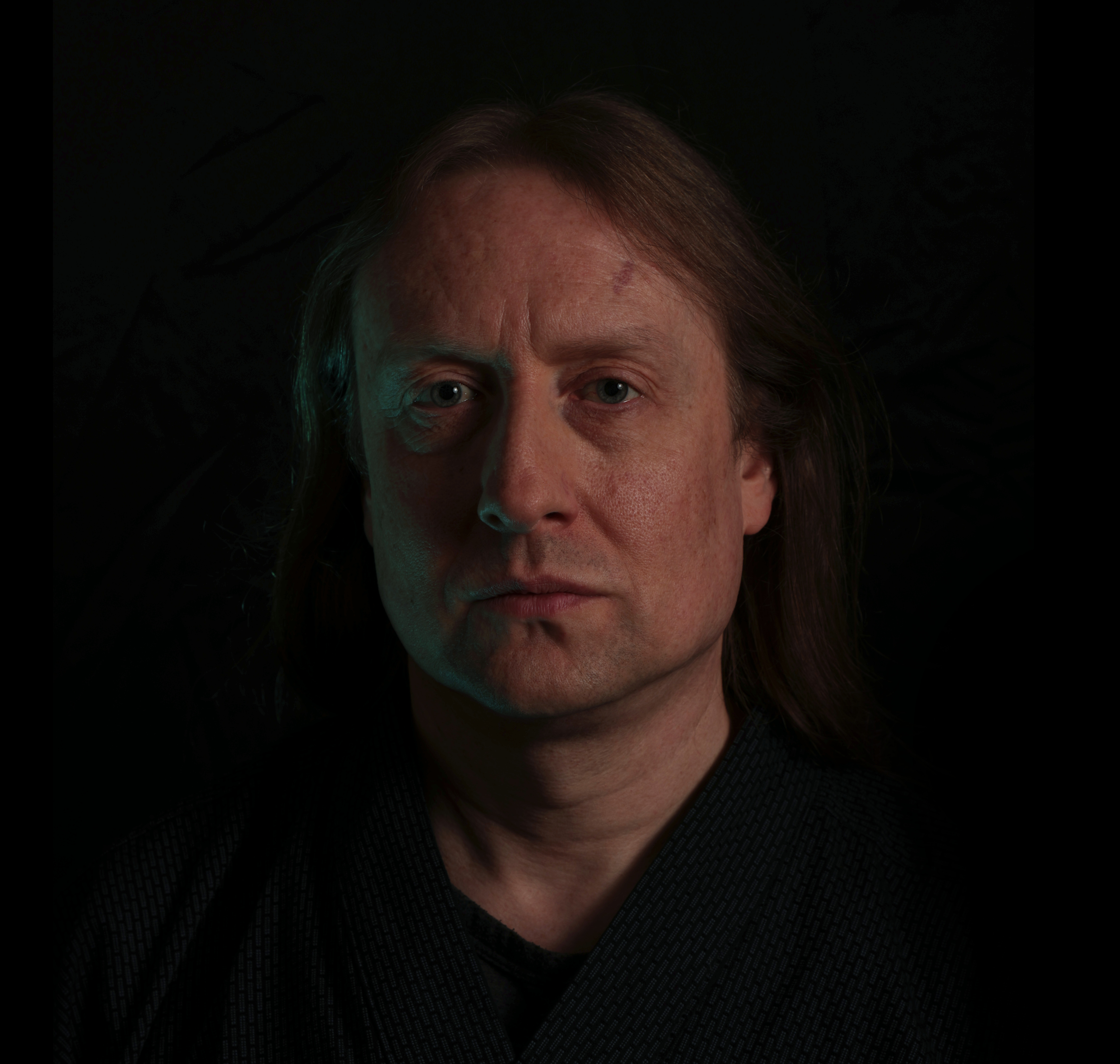
Author & OBE Expert
Graham Nicholls is an English author, as well as a lecturer and advisory board member for The Rhine Research Center. He is a leading practitioner and researcher into out-of-body experiences.
He had his first OBEs in 1987 and has had some of the most acclaimed verified experiences on record. He has participated in research at The Rhine Research Center, The Institute of Noetic Sciences and has organised and taken part in research with biologist Dr. Rupert Sheldrake. He is the author of Avenues of the Human Spirit and Navigating the Out-of-Body Experience. Graham Nicholls has gained much attention for his rational approach to his abilities and has lectured at venues including Cambridge University, Kings College, The Society for Psychical Research, The International Remote Viewing Association Conference, The London Science Museum, London. Graham Nicholls incredible verified OBEs are also featured in several books by other authors.