
Nature Speaks - Are You Listening? w/Mark Langenfeld
What if the answers you’re searching for… aren’t online—but outside? On this episode of ParaTruth: Reborn, Justin & Erik sit down with Mark Langenfeld, author of Wisdom from the Woods: A Year of Gentle Guidance from Mother Nature. Drawing from...

 Apple Podcasts

 Spotify

 RSS Feed

 Amazon Music

 Castbox

 Deezer

 Podcast Addict

 Podchaser

 JioSaavn

 Spreaker

 YouTube
What if the answers you’re searching for… aren’t online—but outside?
On this episode of ParaTruth: Reborn, Justin & Erik sit down with Mark Langenfeld, author of Wisdom from the Woods: A Year of Gentle Guidance from Mother Nature.
Drawing from psychology, mindfulness, and the quiet lessons of nature, Mark shares how the natural world can guide us through stress, uncertainty, and disconnection.
From hiking trails to moments of stillness, we explore how tuning into nature might just help you reconnect—with yourself.
🌲 Is nature trying to tell us something?
🧠 Can it actually improve our mental well-being?
✨ And what happens when we finally slow down enough to listen?
Join us live—and be part of the conversation.
Guest Bio: Mark Langenfeld is the author of Wisdom from the Woods: A Year of Gentle Guidance from Mother Nature, published by Llewellyn Worldwide. (100% of his royalties are donated to the students’ Nutritional Assistance Program at Northwood Technical College in Superior, WI, where Professor Langenfeld teaches psychology and sociology.) He holds a doctorate in clinical psychology from Alliant International University in Fresno, CA. Before teaching, he worked as a therapist for several years. Additionally, he presents workshops at conferences on various topics dealing with improving psychological well-being. His hobbies include juggling, hiking, gardening, meditation, rock collecting, fishing, and doing random acts of kindness. To receive positive daily messages, please follow Dr. Langenfeld on Facebook: https://www.facebook.com/profile.php?id=61556910451200
You can find the book at these distributors:
Llewellyn.com
Walmart.com
BarnesandNoble.com
Amazon.com
Become a supporter of this podcast: https://www.spreaker.com/podcast/paratruth-reborn--6273542/support.
Thanks for listening!
0:00 Coming up on Paratruth Reborn, we are talking to Mark Langfeld about his book Wisdom from the Woods, A Year of gentle Guidance from Mother Nature. Welcome to Para Truth. Truth, how's it going Paratruth is Welcome to Paratruth Reborn.
0:48 My name is Justin and I'm very happy to welcome Mark Langfeld to the show. Thank Mark, Welcome to Paratruth re Born. Thank you for having me on this show. I appreciate it. Yeah, I know. I saw this book and it's something that I think people need to hear about because we have become so disconnected from nature. So I appreciate that you wrote a book about Mother Nature and reconnecting and understanding guidance from nature. But what inspired you to write this book? Well, I wanted to pass on these messages my entire life. I've been hiking and receiving these nature metaphors and these messages from Mother Nature, from true spirits and animal spirits and everything, and I started writing them down. And I started, oh, I suppose ten years ago, journaling on all these different metaphors and the lessons that Mother Nature was teaching. And each journal that I made was roughly about a thousand words.
1:59 It just happen to work out that way. And then after about fifty two of these chapters, I said, hmm, you know there's enough here for a book. Why don't I pass on this knowledge. I don't want to go to the grave and take all these secrets with me. Let everyone know what Mother Nature is sharing with me. And so that's why I wrote the book. That's what inspired me. I wanted to pass on Mother Nature's wisdom. It's not my wisdom, it's Mother Nature's wisdom. I want to just pass it on to other people. Now, for many people watching listening, they would probably think, you know, a clinical psychologist doesn't normally think like this.
2:45 As far as spirits in the wood and learning from nature, how does that shape your view as a guide from nature? Well, I incorporate nature into my counseling. When I was going to graduate school in California. I'm from Minnesota originally, but when I was in graduate school in California, I would do volunteer work at some schools, junior high schools. And the students that I had as. Sort of like a support group that I formed, I would take them on walks around the school grounds, and I would say to them things like say, if you look at the edge of the property there, you see those that tree line, Well, we're all like trees. They look separate, don't they. But if you look on a higher level, you see their branches are all touching, they're all interconnected. We're like that too as people. We're separate and yet we're all interconnected. So I incorporated these nature metaphors in to my therapy sessions, and I got nicknamed the walking Therapist because I ho would always take my client out for a walk, just around the grounds, and we would rely on mother nature.
4:14 That's fascinating, Like I wish therapists, more therapists would do that, because you know, other than just being in nature, being outside is a really invigorating thing for most humans. We need vitamin D from the sun, we need fresh air, not that a lot of our air is fresh these days, but. Still it's interesting because most therapists will have some element of nature inside, like they'll have a little handheld fountain that bubbles up a little bit of water and makes a gurgling sound, and somehow that's supposed to be a substitute for being out in the and I'm like, okay, we need to work on that. I think we can do better.
5:07 Now, you talk about messages from Mother Nature, do you believe Nature is communicating with us like literally or is it in metaphor? Most of the time, she's communicating with us by modeling behavior for us. Whenever I see, whether it's a spirit animal or a tree, or a cloud or a lake, whatever it may be, I always ask the object that I'm studying, what is your message for me? And the thought that pops into my head is do as I'm doing. That's almost always the message. So if I'm looking up at a puffy white cloud and I ask the cloud, what is your message for me? The thought that pops in my head is do as I do. And so I look at the cloud and I'm like, okay, the cloud is peaceful. The cloud is not rushing. The cloud is gently rolling across the sky. It's not in a hurry. Okay, that's the message. I should go through my day as peaceful as a cloud instead of rushing. So when Mother Nature communicates to us in whatever form, it's almost always modeling behavior for us. Look at what Mother Nature is doing, we should do the same.
6:30 Okay, Now, I know a lot of people miss these lessons throughout their entire lives, because in this day and age, we're more so connected to the device that's in our pocket over connected to nature itself. What's one lesson from nature that people consistently overlook. Probably how to give first before expecting in return. And the lesson that I learned through nature was with the ravens.
7:10 I would go out into the woods and the ravens would caw and they would scold me, and they would make a racket because I was taking their space. I was invading their space, and they would fly away and flee, and I thought, well, why are you doing that. I'm a good person. Don't be offended to come back. And so then I decided, during the freezing cold winter, when it was like twenty to thirty below, I thought, I'm going to feed the ravens. So I went out there in the same meadow where I'd seen the ravens, and I started putting down food for them, and they saw it, and this time they didn't caw, they didn't scold me.
7:52 They sat quietly perched in their tree branches and they watched. And then when I left, they came down and they fed, and I continued that all winter long, and pretty soon, I mean within a couple of weeks, as soon as I would enter the woods, the ravens would come gather around me. And I was like, okay, I made new friends. How did I do that? I gave first. And I think that's a mistake that a lot of people don't realize. They think, well, you know, if you want to be my friend, then you have to do something first. I'm just going to sit here and I'll wait for you to come to me. That's the mistake. If you want to reach out to people, if you want to have friends, if you want to strengthen your relationships, even with people you are already friends with, you need to give first before you receive. Okay.
8:49 Now, I find that story fascinating because you know, it's scientifically proven that ravens are one of the smartest birds in the world, and that a lot of people have gotten gifts back from ones that they've befriended. Have you ever had that happen. They will give a gift in the form of a feather, They will drop a feather, okay, And that's the type of gifts that they have given me. Yeah. I mean I've I've heard of people talking about them bringing you know, dead mice and whatnot, dead dead things as well, and it's you know, it's funny, but it's also like that's its way of showing gratefulness is by giving you the gift of food because you did the same for them.
9:38 Yeah. Yeah, Now we've talked about this already, how people are so disconnected from nature. Now, if someone really wants to start being more with nature, how can someone start listening to nature? If they want to do. That, The first thing I recommend is recognize that you are already connected with Mother Nature. We are biological beings, We are connected biologically organically to Mother Nature. So just that recognition that says, oh yeah, I'm already part of nature.
10:19 I don't have to like sign up or join I'm already part of nature. And then you can just engage safely. You know, if there's poisonous plants or if there's dangerous animals, you know, you don't want to go near them. I tend to take more risks. I will go into the woods at night, and I've come across some homeless encampments. I come across some people who are you know, shooting up heroin, and as a man, I feel relatively safe. If I were a woman, I would never try that, certainly not alone. So you can engage with nature safely, however you choose. If people, for example, are homebound, maybe they have some physical limitation and they're not able to leave the house, they can still enjoy nature through the window.
11:17 I'll give you a specific example my intro to psych class. I taught that once at Moose Lake State Prison in Minnesota for the inmates who were about to graduate, and the prison wanted them to have at least one college course under their belt to make it an easier transition for them. So the prison guard would walk me from the front door to the classroom and back, and as I walked past some of the windows, I looked up in the sky. Oh that's a bald eagle. Now, Moose Lake has a lot of lakes, a lot of bald Eagles's quite common. But I remember thinking, how amazing is this.
12:06 I'm inside a prison, and yet I'm still able to connect with mother Nature by just looking out the window. So no matter where you are, even if you're locked up, you can still look outside and you can say, oh, the grass is growing. Oh, look at what that squirrel is doing. Look at how those birds are singing. I should be joyful and sing like that. Look at the clouds. You can notice all kinds of things. And even if it's nighttime. I have stood in the window at night and just let the moonbeams bathe me. I've just stood there and just close my eyes and let the moonbeams shine on me, and I connected with the moon Goddess.
12:48 You don't even have to leave your house. Have you ever experienced anything in nature that you know, felt unexplained that right? Anything like that. There were times that I sensed danger. And this was when I was a child, when I was not physically strong, and I was probably seven years old. I went way, way, way too far into the woods and I started coming across some places where I saw some discarded remnants of hyperderic needles. And it was near the river. This was along the Mississippi River, and I thought, I bet you have some people came here to do drugs. I don't know if they were partying. I don't know if they were making meth or what, but it was they came by boat and there was drug paraphernalia everywhere, and I thought, you know, I had to get out of here. I'm just scared. I'm not going to hang around here to see if anybody shows up. There have been times where I felt like things are not quite right and I've gotten out of there. And another example might be with the weather. There are times that I'm in the woods and suddenly the sky turns yellow and it has that sort of tornado look where the closets are to swirl,
14:19 and I'm like, okay, my animal instincts are telling me it's time to pack up and go. So yeah, there have been a couple of times where things didn't quite feel right. Okay, Now have you ever come across any fairy rings walking around? Oh? Sure, have you? Yeah, that's quite common, particularly lower in the valleys in the gullies. Yeah, and Jack in the pulpit is there and blood rut and I have found a couple of lady slippers as well, both the yellow moccasins and the pink showy Lady slippers, which is the Minnesota state flower by the way. Oh wow.
15:02 Now have you ever like had to tell yourself, you know, don't go pithex or it would be plenty of people that would be going there out of curiosity, and who knows what happens afterwards. But I could you please rephrase the question. I didn't quite follow it. Like, when you've seen the fairy rings, have you ever like told yourself stay away from that? You know, that's their territory, you know, because there's been stories about fairy rings and people going into them and going missing. Has there any of, like been any fear about about fairy rings? Not fear, but respect. When I come upon anything that looks sacred, such as a fairy ring, I will pause, and I will give an offering, okay. And it can be picking up a leaf and holding it in my hand, or it can be picking up a little stone and charging it with my body heat energy. I leave an offering, and then I ask permission mentally. I don't speak out loud, but I mentally ask permission if I can enter the circle, so I'm in communion with them. And I do the same thing with trees. When I was going to school in California, I went to the Sequoia Mountains and I would walk inside these great big trees, these great big Sequoia trees, and I would ask permission mentally, is it, okay,
16:37 may I enter, and then I'd crawl into the tree. The spirits just want to be treated respectfully. Okay. And by the way, one other thing I do whenever I go into the woods, I always carry with me a plastic bag to pick up other people's trash. You'd be surprised how people just discard trash, especially water bottles and you know, wrappers from candy bars. And it's like, my goodness, it's everywhere. I leave with a bag full of trash that I've picked up. Jeez. Yeah, the spirits like that when I pick up the trash. Oh, I'm sure. I mean, you know, we don't want to miss our houses. I mean, some people do, maybe, but for the most part, we don't want to mess in our house. Why would we want to do that in theirs? Yeah, I mean, and we're a part of nature.
17:28 You would think we'd have a little more respect. Yeah. I often will talk with whatever being is there. And one time it turned out to be hilarious, and I was so embarrassed. I was fishing, and I do catch and remise, you know, I don't need to eat the fish. So I was in this gorge where there was cliffs on both sides of me, and there was just this thin hallway like gorge going to the river bank. This is the Saint Louis River, and so I went there, and there's really the only way to get there is behind me. You know, you can come to that place and then walk through the same trail through that gorge.
18:12 And so I'm fishing there and I catch a huge small mouth bass, the largest one I've ever caught, and I picked it up and I took the hook out, and before I released it, I talked to it and I said, aren't you a pretty fish? Yes you are, Yes, you are a pretty fish. Yes you are. And then I put it back and I turned around and there was a father and son standing behind me, waiting to go fishing. And I'm like, oh, I normally don't talk to fish. This was a special occasion. That's so embarrassing. Well, and that's why most of the time you do it in your yes. Yes, Now, do you think certain places in nature hold more energy than others, or even you know, a state of coalm.
19:06 Yes, for me, And I'm sure it's different for every person, but for me, it is the gorge with the high cliffs, and to me, it is reminiscent of a past life. And I did a lot of meditation on this, and I am convinced that I had a past life where I was a Native woman and I was living in this gorge and it was my job to collect water from the stream down below and deliver it to the rest of the people in my tribe. And that was a very good life. I felt very loved in that life.
19:46 So now whenever I go into any sort of area where they have high cliff walls on both sides, I get this feeling of home, like I'm back in the womb again. Well, and so just because I can hear the skeptics now like, how do you know that that's not your mind just wandering or your psyche just kind of talking to you. How do you differentiate that from a past life experience. Well, certainly there's no way to scientifically prove it. However, in the past, when I have been convinced that I had a past life, it was because it resonated with my soul with the gorge. When I was first going the very first time I went to school in California for my graduate work, I stopped by Bryce Canyon, never been there before, never really left the state of Minnesota before, and as I walked down into that canyon, it felt like home. It felt familiar, and I thought to myself, you know, there's going to be a curve coming up here, and sure enough there was, and I'm like, how did I know that? And then I said, and then this narrow path, which it was the entire time, narrow path from the very beginning, it's suddenly going to open up, I feel, and it's going to be a big round room,
21:18 like a living room. And that's where my tribe used to gather for our tribal meetings. And I felt like in that tribe, I was a native woman. It was just that feeling. And sure enough, within a few hundred yards, the gorge suddenly opened up, and I was like, look at this, This is exactly what I knew what happened. And then I thought, and then there's this tree in the middle of the path, and I realized, oh, that can't be true. Okay, that must be my imagination, because there's no trees in Bryce Canyon. Come on. Well, sure enough, I don't know how long, fifteen minutes later, there was a big sequoia tree, one growing up from the center of the path reaching for the sky, and I was like, this is freaking me out. I know what's coming up around the bend and I've never been there before. And then sure enough, in my spirit, I knew that my job when I was that native woman was to go down to the creek and get some water. And I thought, there's no creek here. This is a canyon. It's Bryce canyon.
22:28 There's no creek. Well, after about a two hour hike, sure enough, at the bottom of the canyon, there was a creek, and I was like, Okay, I'm convinced this is not just my imagination. I knew that I had lived here before. That's amazing, Like most people don't get the opportunity to have that experience. So and I know I've had like inklings when I get to a certain area and stuff like that. Yeah, but never a full like download or record of that. Yeah. So is do you feel is there a connection between mindfulness, intuition and natural world?
23:11 Oh? Sure, yeah. I think everything is connected. And I think it's also a matter of being receptive because too many times people block out any sort of extra senses that they get, not just in nature, but just in life. In general, they'll say things like, you know, somebody took advantage of me and I kind of felt like something wasn't right, but I didn't pay any attention to my instincts. Well, let's do that, you know, Let's not be so concerned about our image or our ego that we're not willing to listen to our instincts. Instincts are fascinating. If you look up the term instincts in the dictionary, it says un behavior passed down on a genetic level. Nobody taught us we have these. I'm gonna call it wisdom. We have this wisdom from our ancestors, passed down through our DNA, and no one has to teach us. We have that instinct and it's automatic, and it's true for the entire species.
24:24 It's not just for a couple of people. An instinct is an instinct only if it's true for all humans. For example, the startled response if someone sneaks up behind you and suddenly scares you, you jump. That startled response is true for all humans, not just for some. Do you feel like genetic and generational things are connected? Yeah, oh, yes, definitely. The ancestors passed down a lot of their life lessons, and if you really are in tune with your spirit and your instincts, you can follow those lessons. An example was I have a natural gift to be able to start a campfire. And when I go camping, usually at some kind of pagan event, people may not be able to get a campfire going, and as they call on me, and I'm able to get the campfire set up just right and get it started with just one match, no need for you know, kerosene or you know, lighter fluid or anything like that. And people ask me, where did you learn that? Who taught you how to start a campfire? And I said nobody, It's just my nature. It just came through.
25:48 Now, this has been speculated and there have been scientists that feel they've proven this. Couldn't nature be considered a form of consciousness or have contryiousness? Yes it could. I don't know how to prove it, but certainly the planet is alive and the planet tries its best to heal from all the pollution and damage that unfortunately humans cause. So yes, I think there's a certain amount of consciousness. And I think that when you connect with Mother Nature, I think she's grateful I think that she's happy that you've decided to acknowledge her and embrace her.
26:36 Okay, again, we've talked about this a couple of times now about technology and being distracted. Do modern distractions disconnect us fromthing essential? From nature? They don't disconnect us from nature, but they take our focus away from nature. So if you're engaging with nature, let's say you're sitting on a moss covered rock in a beautiful, serene forest, maybe why not near a lake on a sunny day, and then suddenly your phone goes off, you're not disconnected from nature, you just switched focus. I like to use the word trance because I did my dissertation on hypnotic pain management for people with HIV and AIDS, and a trance is any focused state for hypnosis. You're deeply focused, so much so that you don't notice the pain.
27:46 And then if suddenly somebody calls your name, oh, your focus changes and your turn. So we go from one trance to another all day long. If you're riding in your car and you're lit into your favorite song in the radio and then you miss your exit because you were so entranced in the music, we're just going from one focused state to another, from one trance to another. So yes, technology can distract us, but it doesn't disconnect us. It just takes our focus away. So like, if you're driving and you end up at your location and you don't even know how you got there, is that like a trans like state as well?
28:32 Oh yeah, yeah, I don't know where your focus was, but your mind was somewhere else and you were basically driving on autopilot. So yeah, that was definitely a focused state. Okay. Good. And I've always been curious about this because you know, I've heard people say autopilot, but you know, what does that mean? Really? Like? How how did I get to a place safely without knowing what was going on? Well, this is just my opinion. I think it deals with short term memory. Okay, things that you have in your short term memory terminate within thirty seconds unless you commit it to long term memory. And by the way, I teach this at school. It's part of the psychology class.
29:28 So if you are at a party and you are introduced to someone who you really want to get to know, you'll memorize his or her name and bring it into your long term memory. If you don't, then next thing. You know, two or three other people introduce themselves, and before you know it, who is that first person? What I don't remember? Within thirty seconds, you forgot. So when we're driving on automatic pilot, if nothing remarkable is happening, the traffic is flowing smoothly, nothing dangerous as happening, nothing that is going to cause you to have adrenaline, like a near collision, then you're not likely to remember any of those short term memories. And by the way, I mentioned adrenaline because adrenaline is a hormone that anchors memory.
30:21 If you suddenly have a cat run out in front of your car and you have to slam on the brakes and you're gripping the steering wheel and you're real scared, your body is full of adrenaline. Adrenaline anchors memory, you're not likely to forget that. A year later. You can come back to that same intersection and let's say you have another person of the car and you can say, oh, guess what a year ago, when I was here, this cat ran right in front of the car. I almost hit it. That memory is sunk into your mind because of adrenaline. So if people are on autopilot, it's just that everything's going smoothly. Nothing is remarkable, and within thirty seconds you forgot the route. You forgot the traveling routes that you took.
31:12 It fascinates me because you know, on top of paranormal, the human mind and psyche is just as fascinating as stuff that we can't necessarily explain. Yeah, what has nature taught you personally that changed your life? Mercy? Oh, probably everything. But if I were to pick a highlight, I reflect back on when I was, oh maybe four years old, and I was just barely tall enough to reach the window sill, and I remember looking out the window and seeing a great horned owl sitting in a pine tree in the front yard. And I didn't realize that great horned owls are not supposed to be out during the day, so it kind of surprised me, but I didn't know that. And I was fascinated, mesmerized because this great horn owl was about the same size as me at whatever three or four years old, And the owl turn and looked at me, and our eyes met and we just stared at each other. And I believe, although I can't prove it, I believe that there was a spiritual connection, and that some of her spirit was absorbed into me. And so there was that connection ever since.
32:49 And sometimes this is surprising. I will be sitting meditating peacefully in the woods and an owl will come and land on a branch in broad daylight. A couple of years ago, I was hiking in the woods here in Duluth, and an owl comes right down from the branch. I didn't see it up there. I'm walking through the pine tree force and this owl comes down. It was a great gray owl, and it lands right in front of me. Just it just lands there in front of me and looks at me, and I'm like, hello, yeah, And so I knew I needed to give something, so I sang to it the Goddess chant. And so I just sang one round of the Goddess chant, and then I bowed respectfully and then turned and walked away. And I only took maybe three steps away, and I.
33:41 Peeked back over my shoulder and she was gone, and I was like wow. But before she left, before I turned around to walk away, I got out my cellphone. I took a little picture of her. So then I showed everybody at work, look at this this owl. Came right down in front of me and land. I'm showing everybody, Now, do you. Feel that that was more of a nature spirit saying higher? Do you? Did you feel that was like your guides coming to see you. I think that that was the owl recognizing the owl and me, okacause I believe that I do have owl spirit, and so when she came down and landed in front of me, I think she was recognizing a fellow owl.
34:35 Okay, interesting, Now this will probably get you, but I think I know you'll have an answer for this. What's something you believe about nature that most people would disagree with. Well, a lot of my friends are peg and so I wouldn't say that they would ever disagree with me on any of the nature beliefs. But the average person, the average person who doesn't necessarily have an earth based spirituality, they would say things to me like, well, you know, you're just enjoying nature, and so do I. I have a few friends who are atheists and they say, well, there's no proof. You can't prove anything, and I'm like, yeah, you're right, you can't, but I don't need to. It resonates with me, and that's all I need to know, and I don't try to prove anything to them. If I say to them, oh, this lake is so beautiful and it's so calm, we too need to be calm.
35:48 Because even in my book, I write about when I go looking for lake Superior agots along the shoreline, sometimes I have to step into the water and then I have to be still because my footsteps have stirred up the sediment down below and made the water murky. And you have to be patient wait for things to settle, and that too is a lesson from other nature. We have to wait and be still and let our inner murkiness settle. We need to let our mud settle, and then once it has settled, then you can see clearly to the bottom where the gems lie. So that's a nature metaphor. It's a message from other nature. And my atheist friends say, oh, you just made that up. It's your imagination, and I'm like, well, you can believe whatever you want to believe. It doesn't upset me. You know, they have their path and I have mine, and I'm not out to try to change anybody's mind. So they just have to walk their path.
36:56 I yeah, And you know, in this day and age, we're always looking for proof. I mean, there's so many people that believe Bigfoot isn't real because there's no physical proof anyways. So yeah, and maybe it's human nature, but I feel back in history it was different. Yeah, people believed in mysteries back in the day, things that were unexplainable. The mind has to come up with an answer, and so if we don't have an explanation, or if the explanation we were given just doesn't sit right with our spirit, then we tend to fill in the blanks. By the way, that's why we dream, is because our mind is always trying to make sense of everything, and it's always receiving signals. Even while you sleep, we're always experiencing emotions. Even if that emotion and this peacefulness. Now, let's say you watched a scary movie before you went to sleep, then that emotion is still with you, and in your sleep, your mind tries to make sense of that emotion and it turns it into a visualization or a nightmare. So our minds are always trying to come up with some explanation, and it doesn't necessarily have to be scientific.
38:24 Right now, you've learned many lessons over the years, and obviously you put it into a book. Has nature ever taught you something you didn't want to hear? I don't think so. Some of the lessons were painful, Okay. For example, one of the chapters in my book, I write about pruning a tree. And when I prune my apple tree, it's best if I prune the problematic branches that are small, because some of the branches will grow inward and then they'll crisscross other branches, and when the wind blows, they rub against each other and it rubs the bark off, and then insects get in there, and it gets infected and black mold gets in there. So what really hurts is if I have to cut off a large limb. When I bought my property, there is already a couple of apple trees there. I planted several more.
39:35 Whoever lived there before me did not take good care of the apple trees, and so there's these huge limbs that are crisscrossing, and I had to cut off an entire limb. When you remove or prune a large limb like that, the tree goes into shock and then it's not fruitful for the rest of the summer. It won't bear any fruit. But if you can prune those little branches when they're just starting and you can see that they're starting to turn inward and they're going to rub against the bark, then it doesn't shock the tree. The tree is not traumatized, and the tree will still produce fruit. That is a painful lesson for human behaviors, bad habits that need pruning, because in everyone's life, including my own, I have some bad habits that I need to work on.
40:27 If it's a new bad habit, then it's small, it hasn't started to grow very far. Pruning that is less painful. But oh my goodness, if you have a lifelong habit since you were a child and you try pruning that it's going to pain fall and you emotionally might go into shock. Just because. All all of these that you talk about in the book and that you've talked about tonight. It's one of those things that I feel I should have noticed and taken lessons from us I was in nature or even just in daily life. What's a simple daily practice our listeners can start immediately to start reconnecting with nature.
41:25 Be grateful for things that we've taken for granted. It was a few years ago that somebody said to me, you know, I give thanks to the sun God for shining on us, because without the sun, the whole planet would die. And I was like, you know, you're right, and I've never thanked the Sun God. I've just been taking it for granted. And so now I make that a daily practice. Whether it's sunny or not, even if it's cloudy. If it's daylight, I will thank the Sun God, and if it's night, I thank the moon Goddess. Giving thanks is a daily habit that quite frankly, everybody needs to do.
42:10 I feel I give things a lot for just being able to wake up in the morning. Yeah, I've never really thought about thinking multiple things throughout the day, so that some a lesson I need to learn, for sure. And being thankful in general, I feel in our society today we've lost a lot of that. Yeah, even towards each other. Yeah, that's true. We have so much to be grateful for, and you know the old saying you don't realize what you have until it's gone. We need to be thankful for every little thing. I turn on the light and automatically it goes on. Well, you know, there's probably hundreds of employees at the electric company who are working to make sure I can just flick out a light and there it is, and I just take it for granted.
43:08 For sure. Now we haven't really we've touched on us a little bit. But can nature help with anxiety, burnout, depression, things like that? I believe. So I cannot clinically say that a person would be treated by mother Nature. However, it certainly would help a person relax. So in my book, I say, you know this is this book is not a substitute for therapy. This book is not a cure for any mental illness or psychological disorder. However, to answer your question, I can personally say I feel more relaxed when I'm in nature, and even when Okay, during the COVID pandemic, I was feeling depressed, socially isolated because everybody was supposed to be locked down and isolate them celves. And I would go out in nature and I would just sit and my depression would latin. It worked for me. I can't guarantee that it'll work for anyone else, but I can say that nature is a calming effect.
44:32 Do you feel that you mentioned bringing patients out into nature and walking around. Have you ever seen results in that way? When you do that, they recognize the metaphors. First of all, they like the fact that they're able to walk because it helps burn off their energy. If they're just sitting there in a therapy session and they're talking about problems, deep problems, sometimes abuse situations, well, if you're just sitting still, it's a lot to deal with. How do you handle your emotions? So we go out in nature. Walking is one way of sort of burning off that cortisol, the stress hormone cortisol. And I will often when I counsel people bring fruit to peel, like an orange or a banana, because it gives them something to do with their hands.
45:39 You know, they can peel that orange and it helps them release some of that stress. It's a relaxing way to work out, burn off the energy and just by walking. Okay, what is one recess that exercise you recommend for overwhelmed people? Perhaps letting go would be a good reset exercise. Letting go of other people's expectations. Okay, I was born to be me, you were going to be you, and all these people around us have all these expectations. Oh, you should be like this, you should be like that all the time. People are expecting things from us that can put a lot of stress on us. So in order to reset emotionally speaking, let go of those expectations. The best person I can be is myself. And then once you embrace that and you don't have to compare yourself to somebody else, then that's a way of resetting and you can find the exhale and say, yeah, it's enough to be me. I'm enough just the way I am.
47:09 What's one thing or anything that you hope people get from this book. I hope they recognize their connection that they already have. There's fifty two chapters, one for each week of the year, so they can read it as a weekly devotional if they like. They don't have to, but they could. The one thing I hope people get from this is that they understand that they're already connected to Mother Nature. And every single one of the fifty two chapters has a little assignment at the end. It's not called an assignment.
47:49 It's called today's teaching from Mother Nature. And it gives you a little exercise. It gives you a little assignment. Try this, Try that, very very easy to follow step by step, and if people don't like it, they can switch to the next chapter, they can jump around. But that's where I hope people get out of it. I hope that they put things into practice. You know, don't just read the book and then roll over and go to sleep. Look at some of those those lessons today's teaching mother Nature, and then follow those steps and see how it improves your life, see how it enhances your overall well being.
48:37 So it's not meant to you know, go from front to back and then you're done, like you should through and choose the ones that you read to pay attention. Yes and Llewellyn came up with the idea to have a subject chapter index in the back of the book. You can up whatever subject you're interested in. This one says fear, happiness, self acceptance, stress. If you're feeling stressed out, look at all these chapters deal with stress chapter three, chapter eleven, Chapter twenty one, chapter twenty two, chapter twenty nine. It also deals with animals, birds, carnivores, wisdom from your dog, herbivores, insects, elements, trees, plants.
49:28 If you're really into things like let's say water, creatures. Okay, well look that up in the subject chapter index and then you can see, oh, there's three different chapters that deal with water creatures. I'll read those first. So yeah, you can certainly jump around as you wish. Okay, now it is getting pretty close to the time to let you go, So I wanted to give you the chance to tell everybody where they can find you find your work. And you had mentioned to me off here that the sales from this book is going to a I want you to mention that as well. Yeah. On the back of the book it says one hundred percent of my author's royalties go to the Student Nutrition Assistance program at Northwood Technical College, where I teach psychology, and that is to feed the hungry students. We give out food vouchers and grocery cards to the students, not only them, but their families as well, because some of my students have children. So I'm not making a dime off this book. It's basically a fundraiser helping feed the students.
50:35 And people ask me, why are you doing that. You spent ten years writing this book and you're just giving away all your profits, And I said, yeah, because you know what, I came from an impoverished family, and when I went to school, my parents couldn't afford nothing, not tuition, not rooming board, not even groceries. And there were times that I would come home after spending the whole day at college, I was very hungry and all I had for supper was a bowl of cereal. More than once that happened to me because I just didn't have any other food. So when I see my own students hungry, yeah, my heart reaches out to them. And as far as reaching me, I do have a Facebook account and it's just my name, Mark Langenfeld and you'll see my shiny face.
51:25 There's like three or four other Mark Langenfelds, but there's only one with my image, and you can certainly look me up on Facebook. Every day I post one positive message. I don't post anything political. I don't post anything dealing with anger or you know, frustration or anything about war. I just post one positive message every single day along with a picture. So if you are feeling like you could use a little spiritual lift, go ahead and look me up on Facebook. Awesome, all right, Mark, thank you so much for being on Paratruth be Born.
52:05 Thank you. All right, folks, that is it that we have for this week, Para Truthers. You know one thing that I always forget to do and Mark kind of taught me this already right now is thank you for being here, watching, listening every week. So make sure you check out Paratruth Reborn or just google Paratruth you'll find us. We're on all the social medias. We are a part of several radio stations now and we are so thankful for that as well. Make sure you like, share and subscribe wherever you listen or watch as well until next week where you'll find us, same time, same channel. My name is Justin Luck to you guys.
52:53 Later school
Wisdom from the Woods: A Year of Gentle Guidance from Mother Nature
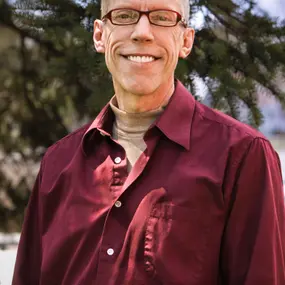
Mark Langenfeld is the author of Wisdom from the Woods: A Year of Gentle Guidance from Mother Nature, published by Llewellyn Worldwide. (100% of his royalties are donated to the students’ Nutritional Assistance Program at Northwood Technical College in Superior, WI, where Professor Langenfeld teaches psychology and sociology.) He holds a doctorate in clinical psychology from Alliant International University in Fresno, CA. Before teaching, he worked as a therapist for several years. Additionally, he presents workshops at conferences on various topics dealing with improving psychological well-being. His hobbies include juggling, hiking, gardening, meditation, rock collecting, fishing, and doing random acts of kindness. To receive positive daily messages, please follow Dr. Langenfeld on Facebook: https://www.facebook.com/profile.php?id=61556910451200


